
In a twin pregnancy, an ultrasound report contains several important pieces of information that a patient should review.
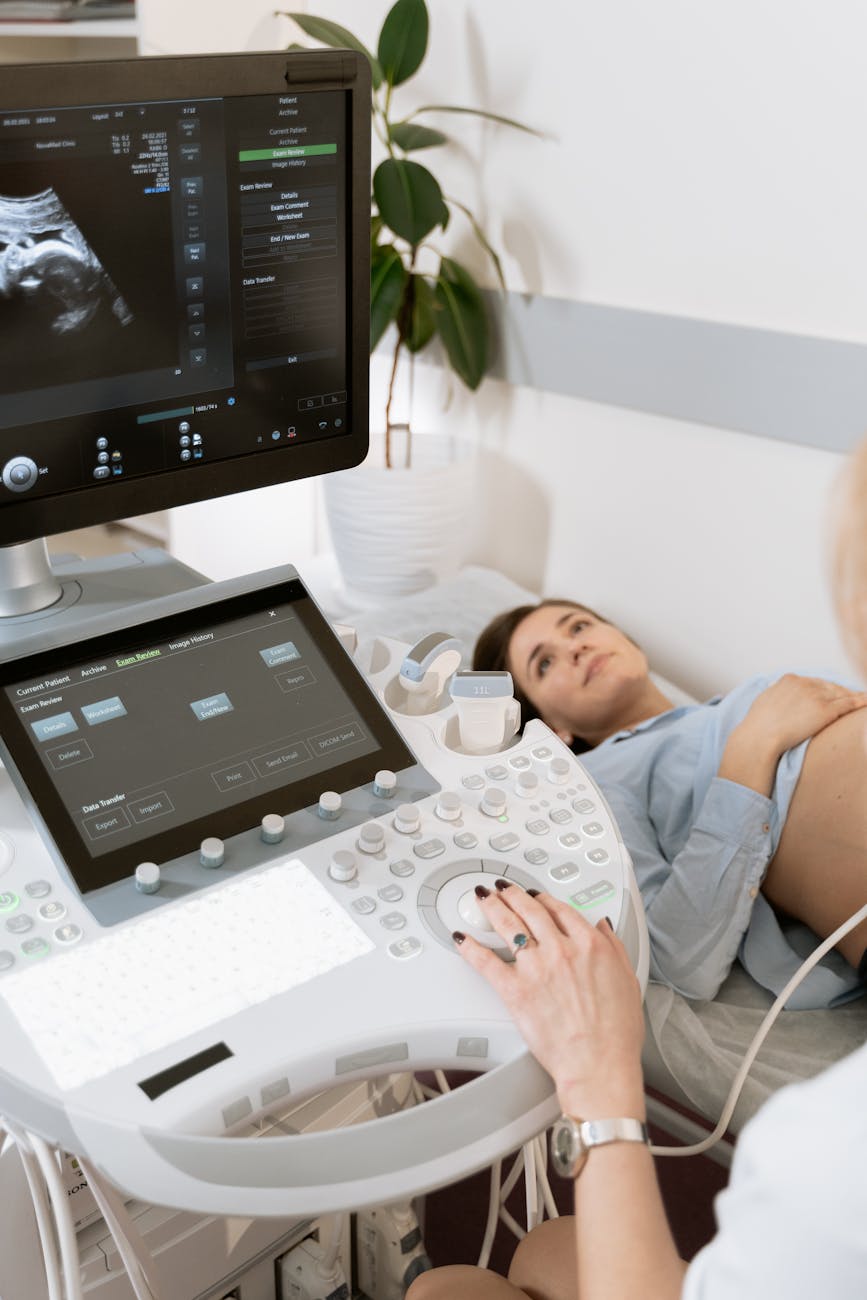
Here are key elements to focus on:
1. Gestational Age: Confirm the gestational age to ensure that the development of the twins is on track for the expected due date.
2. Number of Fetuses: Verify the presence of two fetuses to confirm the twin pregnancy.
3. Chorionicity and Amnionicity: Check whether the twins are monochorionic (sharing one placenta) or dichorionic (each having their own placenta), and whether they are monoamniotic (sharing one amniotic sac) or diamniotic (each having their own sac). This information is crucial for assessing risks and management.
4. Fetal Heart Rates: Ensure that each twin has a normal heart rate, typically between 110 and 160 beats per minute.
5. Fetal Growth and Measurements: Review the measurements for each twin, including head circumference, abdominal circumference, and femur length, to assess their growth and development.
6. Position and Presentation: Note the position of each twin (e.g., cephalic, breech) to anticipate the mode of delivery.
7. Placental Location: Check the location of the placenta(s) to ensure they are not covering the cervix (placenta previa).
8. Amniotic Fluid Levels: Ensure that amniotic fluid levels are within normal ranges for each twin, as abnormalities can indicate potential issues.
9. Anatomy Scan: Look for any mention of anatomical anomalies or concerns in either fetus.
10. Cervical Length: Evaluate the cervical length if mentioned, as a short cervix can indicate a risk of preterm labor.
11. Additional Notes or Concerns: Review any additional comments or concerns noted by the sonographer or radiologist.
If you have questions or concerns about any part of the ultrasound report, it’s important to discuss them with your healthcare provider for clarification and further guidance.




 Brainy Woman
Leave a Reply